
Jump to: Current Leadership / Awards Committee / Past Leadership / Bylaws
Current Leadership

Dr. Elizabeth Walsh, President
About Liz
Dr. Liz Walsh is a Research Scientist currently working on various projects which include examining: aggression vs irritation in various honey bee stocks, drone reproductive health and biology, queen reproductive health after stressor exposure, and honey bee variation in responses to pathogens (chalkbrood and Nosema).
She completed her postdoctoral fellowship with Dr. Steve Pernal, of Agriculture and Agri-Food Canada, at the Beaverlodge Research Farm in Alberta. Liz’s postdoc was spent exploring the links between honey bee health challenges and honey bee biomarkers as a part of the national BeeCSI project, but she also did work with AFB and chalkbrood exploring stock variation, asymptomatic vs. symptomatic infections, and more. This was all very different than her dissertation work, which was done at Texas A&M University with Dr. Juliana Rangel where Liz explored the impact of miticide exposure in immature queens. Liz is pleased to be well into her “teenage” years as a beekeeper, since she began keeping bees as a young high school student in her home state of Wisconsin.

Dr. Dan Schmehl, Vice President
Sr. Principal Scientist, Science Fellow, and Pollinator Specialist
Bayer CropScience
700 Chesterfield Parkway West
Chesterfield, MO 63017
E-mail:
About Dan
Dan is a Sr. Principal Scientist, Science Fellow, and pollinator specialist at Bayer CropScience, located in Chesterfield, Missouri, USA. He earned his B.S. in Biology from Messiah College in 2007, followed by a Ph.D. in Entomology with a focus on Apiculture from Penn State University in 2013. Following his graduate studies, Dan completed his post-doc at the University of Florida, where he specialized in pesticide research and Varroa mite management. Dan joined Bayer in 2015 where he has been primarily responsible for pesticide safety evaluations and supporting Bayer’s bee health research initiatives. Dan’s work involves conducting toxicity studies and developing innovative methods and approaches to advance the science of pesticide risk assessment for bees. His research and assessments play a crucial role in ensuring environmentally sustainable use rates and patterns, optimizing application timing, and formulating risk mitigation strategies for Bayer’s crop protection portfolio.

Dr. Rogan Tokach, Secretary-Treasurer
Assistant Professor, Applied Honey Bee Entomology
School of Natural Resource Sciences
NDSU Dept 7650, PO Box 6050
Fargo, ND 58108-6050
E-mail:
About Rogan
Rogan is a new Assistant Professor at North Dakota State University. He graduated with his Ph.D. from Auburn University in 2025 where he studied Varroa and Tropilaelaps mite management and received his MS from University of Nebraska-Lincoln in 2022 where he looked at the impacts of pesticides on colony functions. The primary goal of his research and extension program at NDSU is to work with beekeepers in North Dakota to minimize honey bee colony losses. North Dakota is the number one honey producing state with hundreds of thousands of colonies moving in every summer. Rogan’s research involves collaborating with commercial beekeepers performing applied research investigating solutions to problems they face with the goal of improving colony health within their operations.
Awards Committee

Dr. Daiana De Souza, Chair
Sr. Ecotoxicologist, Regulatory sciences, and Pollinator Specialist
BASF Agricultural Solutions US LLC
26 Davis Drive, RTP
Raleigh, NC 27709-3528
E-mail:
About Daiana
Daiana is a Senior Ecotoxicologist, Regulatory Sciences and Pollinator Specialist at BASF Agricultural Solutions US LLC in Raleigh, NC. She earned a B.S. in Biology from Bahia University of Science and Technology in 2007 and holds a Master’s degree in Entomology and a Ph.D. in Genetics from the University of São Paulo. Her academic background includes five years of postdoctoral research at North Carolina State University, where she studied insect developmental biology, followed by a three-year postdoctoral fellowship in ecotoxicology at Cornell University focused on risk assessment of pesticide exposure to pollinating insects during immature life stages. She joined BASF in 2021 and conducts pesticide safety evaluations while supporting the company’s pollinator research initiatives. Her responsibilities include designing and conducting toxicity studies and developing novel methodologies to advance pesticide risk assessment for bees. Her work informs environmentally sustainable use rates and application practices and supports the development of risk mitigation strategies across BASF’s crop protection portfolio. Daiana is committed to scientific research and innovative initiatives. She is actively engaged with the U.S. Pollinator Research Task Force (PRTF) and contributes to the Physiology, Biochemistry, and Toxicology Branch of the Entomological Society of America.
Dr. Garett Slater
Assistant Professor and Honey Bee Extension Entomologist
Department of Entomology, Texas A&M AgriLife
1710 FM3053
Overton, TX 75684
E-mail:
About Garett
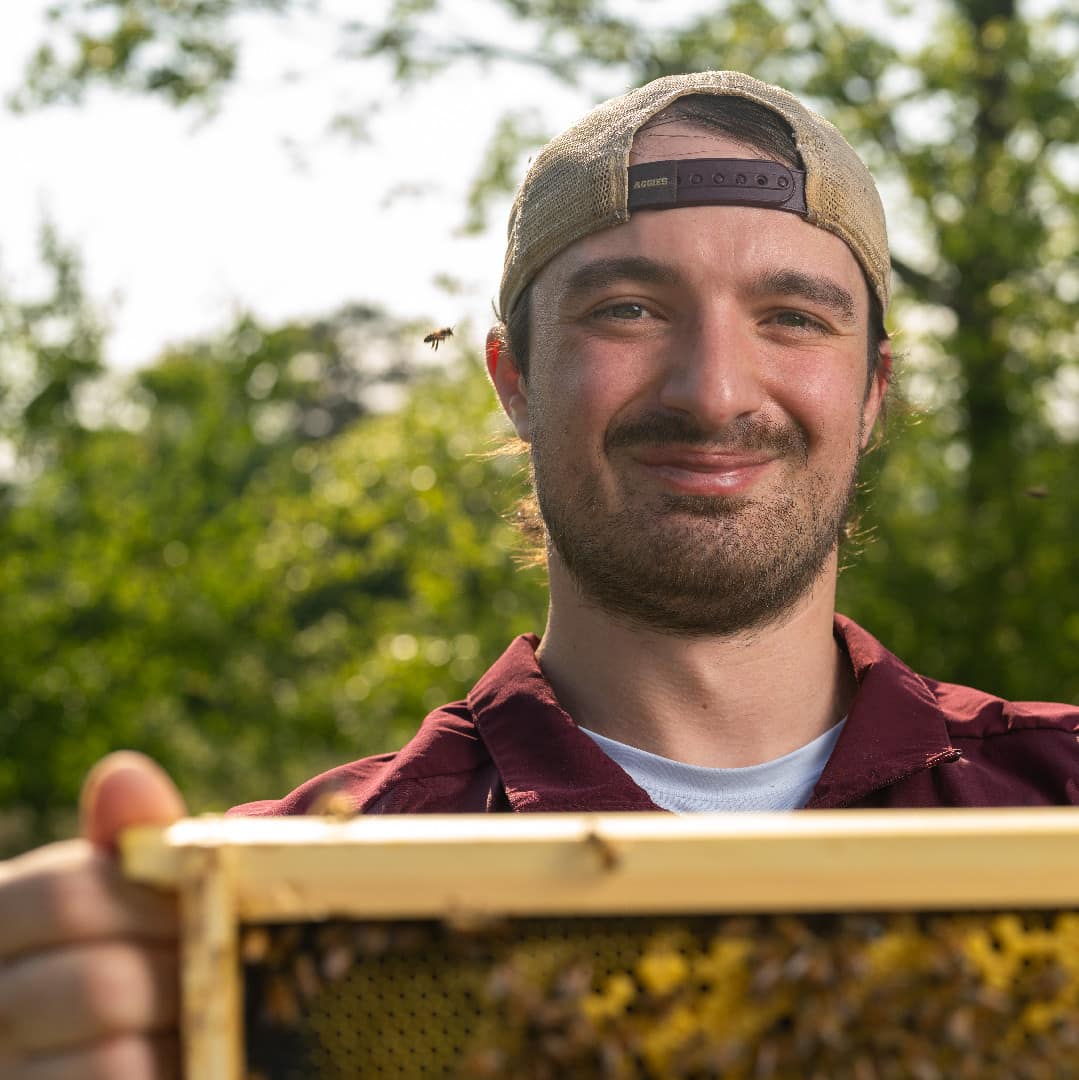
Garett is an Assistant Professor and Apiculture Extension Entomologist at Texas A&M AgriLife Research and Extension in Overton, TX. As the Honey Bee Extension Specialist at Texas A&M AgriLife Extension, his primary role is to deliver extension services and applied research tailored to the needs of beekeepers, promoting sustainable practices and economic development of beekeepers. Presently, he is leading a study to develop modern breeding tools with the aim of helping breeders enhance the health and survival of honey bee colonies.

Dr. Julia Fine
Research Entomologist
USDA-ARS Pollinator Health Research Unit
Davis, California
E-mail:
About Julia
Julia is a Research Entomologist with USDA-ARS where she focuses on insect toxicology and pollinator health. At the moment, her research primarily centers on developing therapeutics and mitigation strategies to enhance honey bee health and performance. She is also interested in identifying and characterizing the effects of stress on aspects of honey bee biology, such as reproduction and behavior, which can be difficult to diagnose.
Past Leadership
Presidents
| Year(s) * | Name | Affiliation |
|---|---|---|
| 2024-2025 | Michael Simone-Finstrom | USDA – Baton Rouge |
| 2022-2023 | Margarita López-Uribe | Penn State University |
| 2020-2021 | Judy Wu-Smart | University of Nebraska, Lincoln |
| 2018-2019 | Michael Simone-Finstrom | USDA – Baton Rouge |
| 2016-2017 | Elina Niño | UC Davis |
| 2015 | Jennifer Tsuruda | Clemson University |
| 2014 | Juliana Rangel | Texas A&M |
| 2013 | Zachary Huang | MSU |
| 2012 | Ramesh Sagili | Oregon State University |
| 2011 | Thomas Webster | Kentucky State University |
| 2010 | Greg Hunt | Purdue University |
Secretary-Treasurers
| Years * | Name | Affiliation |
|---|---|---|
| 2022-2025 | Priya Basu | Washington State University |
| 2017-2021 | Margaret Couvillon | Virginia Tech |
| 2011-2016 | Lanie Bourgeois | USDA – Baton Rouge |
| 2005 – 2010 | Eric Mussen | UC Davis |
* Officer terms begin at ABRC during listed year and continue until the following year’s ABRC.
Bylaws
Last revision to Bylaws was made in January 2024.
Article 1 – NAME
Section 1 – This organization shall be known as the American Association of Professional Apiculturists, or AAPA, for operational purposes.
Article 2 – PURPOSE
Section 1 – The Association exists to be a source of research-based information and recommendations on all matters of honey bee science and management and to foster cooperation, dialogue, and professional growth among extension, regulatory, teaching, and research honey bee specialists. The activities and outcomes of the Association will include: position papers and guidance on matters of national interest, technical bulletins, member awards and scholarships, forums for presenting and discussing research results, and forums for identifying extension, regulatory, and research priorities.
Article 3 – MEMBERSHIP
Section 1 – Membership is open to individuals who devote a significant amount of their time to research, extension, college or university teaching, and/or regulatory activities relating to honey bees.
Section 2 – Payment of dues, according to the following classes of membership, is necessary for membership and voting privileges.
Section 3 – The membership of the Association shall be divided into the following classes:
- Individual –Any qualified person living and/or working in the United States who wishes to join the Association. Voting privileges are included.
- Student –Any qualified college student who wishes to join the Association. Such membership shall not have voting privileges.
- Associate –Any person or organization interested in supporting the purpose of this Association. Such membership shall not have voting privileges.
- Emeritus –Any person who has retired from the fore mentioned bee-related activities. Candidates for invitation to Emeritus status will be solicited at Annual Meetings and will be subject to a vote of the members in attendance. Emeritus members are not required to pay dues and do not have voting privileges.
Article 4 – DUES
Section 1 – The dues shall be reviewed annually and proposed changes voted on by ballot.
Section 2 – The annual dues shall be payable in advance of the Annual Meeting and received by the Secretary-Treasurer by the Annual Meeting, on which date delinquent members shall be dropped from the membership register and thereupon shall forfeit all rights and privileges of the Association.
Section 3 – The fiscal year and membership year shall be from January 1 to December 31 of each year.
Article 5 – CONDUCT OF BUSINESS
Section 1 – The business affairs of the Association shall be conducted by the officers, as described in Article 6.
Section 2 – Association business may be conducted by e-mail. If voting is required, ballots shall be e-mailed to all members. A brief pro and con explanation of each issue, deadline date for receipt of ballots, and return address shall be indicated on each ballot. A majority vote will carry.
Article 6 – OFFICERS
Section 1 – The officers of the Association shall be a President, Vice-President, and Secretary-Treasurer, which make up the Executive Board.
Section 2 – The President shall have general supervision of the affairs of the Association and shall preside at all business meetings of the Association. The President shall appoint all committees and shall be an ex-officio member of the committees.
Section 3 – The Vice-President, in the absence or disability of the President, shall perform the functions of the office of President The Vice-President will lead the Annual Meeting per Article 9, Section 3. Upon completion of term as Vice-President, the Vice-President will transition to President upon agreement by a majority of the voting membership in attendance of the Annual Business Meeting.
Section 4 – The Secretary-Treasurer shall attend and keep a complete and correct record of all meetings of the Association. The Secretary-Treasurer will maintain an accurate and updated membership roll. Within 15 days after the Annual Meeting this officer shall send copies of the minutes to the President and Vice-President. The Secretary-Treasurer shall approve and pay all bills in a timely manner for the Association and maintain accurate records of the Association’s finances.
Section 5 – In case of the extended absence or incapacity of the Secretary-Treasurer, the President may approve and pay bills.
Section 6 – The Executive Board shall be made up of the officers representing, as much as possible, regulation, university research, university teaching, extension, and USDA. At the initiation of the President, the Board may meet via conference call or e-mail about three months before the annual business meeting to assess the year’s activities and identify agenda items for the annual meeting. Prior to publication, all Association publications intended for distribution to members shall be reviewed by the Executive Board.
Section 7 – Terms for all officers are for the two-year period lasting from the meeting at which they are elected. An individual can be re-elected for Secretary-Treasurer for a second term (4 years total). No individual may hold the same office for more than two consecutive terms (4 years total) and at least two terms must lapse before an individual is again eligible for the same office.
Article 7 – COMMITTEES
Section 1 – The President shall appoint such committees as are necessary for the efficient conduct of the Association’s activities.
If a committee member is unable to perform their duties, as determined by a majority of the Executive Board, then the President will appoint a replacement to serve until that committee member can resume their duties or the next election, whichever comes first.
Section 2 – The Awards Committee shall oversee the administration of all awards for the Section. The Awards Committee shall be responsible for (1) soliciting and ranking nominations and selecting the awardee(s), (2) notifying the awardee(s), (3) announcing the award(s) to members, and (4) ensuring that reports or presentations by awardees are given to the membership as part of the annual conference or business meetings in accordance with the award guidelines. The Awards Committee members shall independently review nominations and rank them, finding alternate reviewers for cases of conflicts of interest or additional reviewers for awards given at the annual conference. The Awards Committee Chair will summarize the results and discuss them with the other committee members as needed to reach a consensus. The committee shall prepare letters announcing the winners, which the Executive Board will disseminate to the membership.
The Awards Committee shall consist of three members, serving staggered terms of three years, with one new member elected each year. The senior members shall serve as Chair of the Committee during the third year of their term. Consideration should be given to representation from different institutions and diverse research specialties when electing the new member.
Section 3 – The Publications Committee shall oversee the management of publications produced and supported by the organization. Members of the Publications Committee shall be responsible for (1) serving as guest editor for association special issues through a peer-reviewed scientific journal; (2) organizing the publication of conference Proceedings; (3) communicating deadlines associated with publications to the membership through the Executive Board; (4) evaluating, assessing needs, and producing additional publications related to organization priorities; (5) ensuring that reports of activities are given to the membership as part of the annual conference or business meetings.
The Publications Committee shall consist of three members, serving staggered terms of three years, with one new member elected each year. Consideration of committee membership should be given to representation from different institutions and diverse research specialties when electing the new member. The senior members shall serve as Chair of the Committee during the third year of their term. The committee has the power, under consultation with the executive board, to solicit ad hoc committee members to assist in specific tasks as needed.
Article 8 – FINANCES
Section 1 –All Association expenditures must be approved in advance by the Executive Board.
Section 2 –No indebtedness shall be incurred by any officer or member of the Association, except as authorized in Article 6, Sections 4 and 5.
Article 9 – ANNUAL MEETING
Section 1 – The Association shall hold one meeting each year, designated the Annual Meeting or The American Bee Research Conference.
Section 2 – The site of the Annual Meeting shall be selected by the President in conjunction with the Apiary Inspectors of America and the North American Beekeeping conventions.
Section 3 – The Vice-President will organize the Annual Meeting in coordination with the Executive Board, and is responsible for the publication of the conference proceedings.
Article 10 – BUSINESS MEETING
Section 1 – The Association shall hold a business meeting, led by the President, in conjunction with the Annual Meeting, and the Secretary-Treasurer will record meeting minutes.
Section 2 – Elections will be by electronic ballot, and results will be communicated by the Executive Board. Elections will occur in the fall of each year (suggested election date of Dec 1), with results announced by January 1st or at the annual business meeting, whichever comes first. Newly elected officers shall begin their position after the conclusion of the next American Bee Research Conference.
Section 3 – The order of business for the Annual Business Meeting, unless changed by a majority vote of the members present and voting, shall be:
- Call to order.
- Preview of agenda for additions, deletions, and/or modifications.
- Reports of Officers (including a financial report by the Secretary-Treasurer).
- Reports of Committees.
- Unfinished business.
- New business.
- Communication and bills.
- Nomination and election of new officers, when necessary.
- Resolutions formulated to be voted on by ballot.
- Adjournment.
Article 11 – AMENDMENTS
Section 1 – Changes in these bylaws may be made by a 2/3 majority of voting members casting a ballot.
Section 2 – Written notice of the proposed amendment(s) shall be sent to every member at least one month before the last date for return of ballots.
Section 3 – Proposed amendments shall be submitted in writing to the Association President for subsequent distribution to the membership.